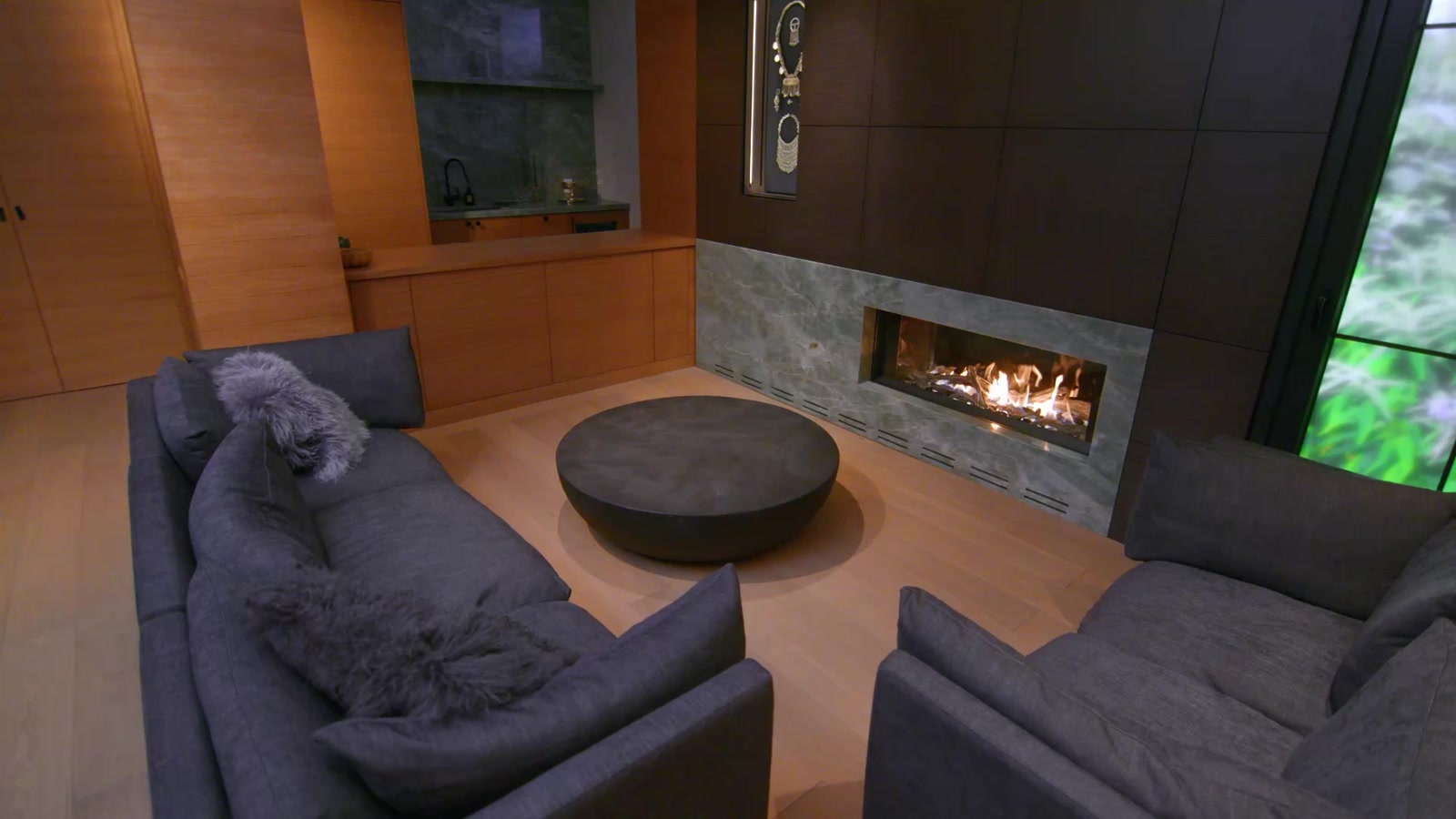
To film a high-end interior or design product, control three things: the light in the room, the reflections in its surfaces and the way the camera moves through it. Show the product in a finished space first, then go close on the details that show craft, such as a join, a finish, a flame or a fabric. Nowa Film, a Toronto video production company, made a product film for the fireplace brand Igne Ferro that moves between finished rooms and close shots of flame; video production with us usually costs $3,500 to $25,000 (CAD).
Light: windows, practicals and the hour of the day
Start with the light the room already has. A finished interior is designed around its windows and its practicals: the lamps, pendants and fixtures that appear in frame. The film should look like that room on a good day. Walk it at the hour you plan to shoot and judge it through the lens, because the eye forgives what the camera records.
Mixing those sources is the hard part. Daylight is cool and shifts through the day; most interior fixtures are warmer and constant. Choose one source to lead each scene, often the window in daytime, and bring the others into line. Dim a pendant until it reads as a glow instead of a hot spot. Replace a bulb whose colour fights the rest. Add soft light from the window side so it looks as if it belongs there. Where the owner allows, switch off the ceiling downlights that flatten a room.
Time of day is a design decision. Low sun through a side window rakes across stone and wood and shows their texture. A fireplace, a lit cabinet or a pendant reads better when the room is darker than the product, so plan those shots for dusk or with the blinds drawn. For offices and venues where little can change, our note on lighting a room you cannot control covers the compromises.
Marble, glass, metal and wood: surfaces that work against the camera
Polished surfaces show whatever faces them, including the camera, the crew and the lights. Textured surfaces show their texture only when light crosses them. A design product usually has both, sometimes in the same frame.
| Surface or element | The filming problem | The fix |
|---|---|---|
| Polished marble and stone | Mirrors the camera, crew and windows; front light hides the veining | Shoot at an angle, flag what it reflects, light from the side |
| Glass fronts and screens | Reflections hide what sits behind the glass | Darken what the glass faces, use a polarising filter, test the angle on camera |
| Brushed and polished metal | Hard hot spots from every fixture in the room | Large soft sources or bounce; move the reflection instead of fighting it |
| Dark wood and matte black | Absorbs light, so detail falls into shadow | Expose for the dark material and add a soft edge light to separate it |
| Honed stone, concrete and plaster | Looks flat and grey in front light | Low raking light from one side |
| Open flame | Disappears in a bright room and changes from moment to moment | Bring the room down to the flame and let it settle before each take |
| Fabric and upholstery | Colour shifts under mixed light; the weave disappears | One light colour per scene, side light for texture, creases steamed out |
| White walls and cabinetry | Loses its edges and picks up colour from everything nearby | Expose for the white and control colour bouncing off floors and wood |
Check every surface on camera before the day is committed. A polished floor that looks clean to the eye can hold a mirror image of the whole crew.
How do you show scale and context?
A fireplace, a pendant or a kitchen island on its own reads as an object of unknown size. Show it in its room first: a frame that includes the sofa, a doorway or a person tells the viewer how big it is and how it is lived with. Then go close. A film of only details leaves a buyer unsure what they are buying, and a film of only wide rooms sells the architecture instead of the product.
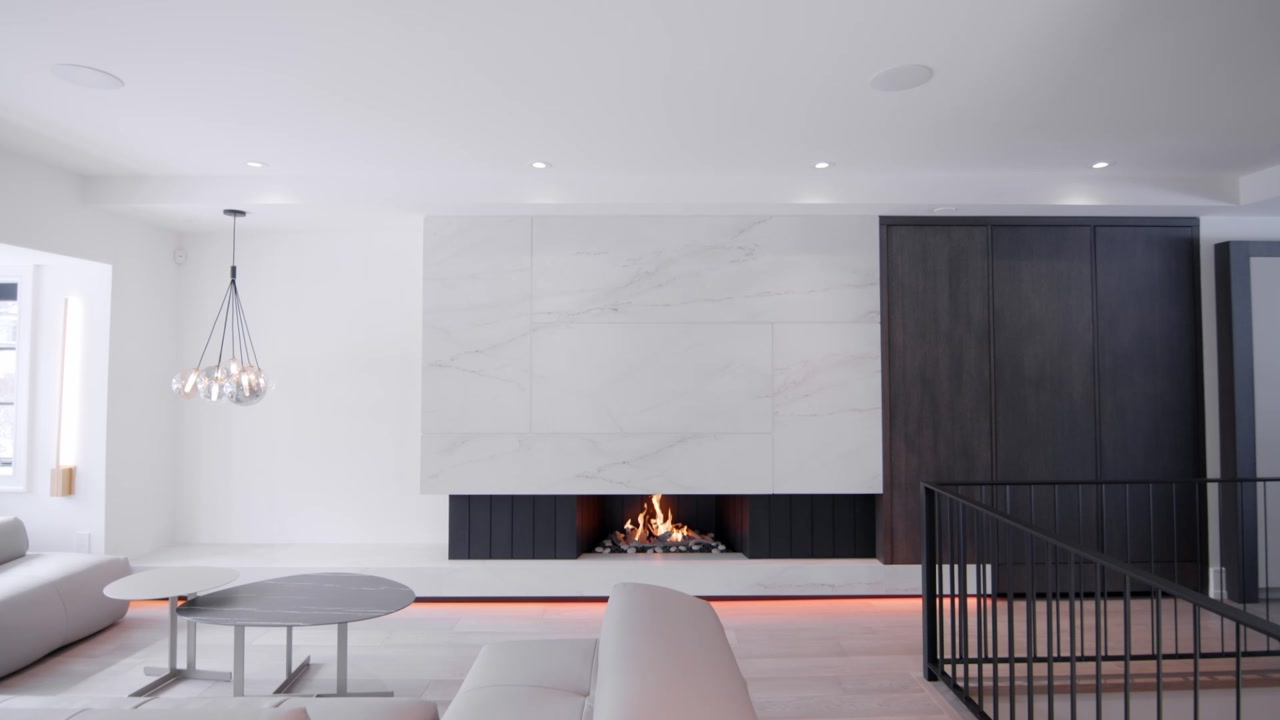
Our product film for Igne Ferro moves between the two scales. It shows fireplaces in finished rooms: a long linear unit in a white marble wall, one framed in green-grey stone against dark wood, and a classic firebox in a columned marble mantel. Close shots of flames over black chips sit between them, and the film ends in a white kitchen with a long island.
Hands are a quieter scale reference than a whole person. A hand on a drawer pull shows size and invites touch while the product stays the subject.
Controlled camera movement
Interiors reward slow, deliberate movement. A slider move of a metre (about 3 ft), a slow push towards a fireplace or a gentle arc around an island shows depth and lets reflections travel across stone. Handheld energy rarely suits a finished room.
- Keep verticals straight. A tilted camera makes walls and cabinetry lean.
- Give each move a reason: to reveal, to follow a line in the design or to show depth.
- Start and end every move on a composed frame, so the edit can cut on either.
- Keep speeds consistent, so cuts between rooms feel continuous.
- Rehearse moves past glass and polished stone, because the reflection moves with the camera.
The details that sell craft, and the resets that protect them
Craft lives in the details a buyer would touch: a mitred stone join, the edge of a countertop, a hinge, a weld line, the grain where two wood panels meet, the weave of a fabric, a flame settling over its bed. Ask the maker which details took longest to get right. Those are the close shots, and they deserve the same light and time as the wides.
Styling is a short list agreed before the day. Remove what competes with the product, such as cables, remotes, personal photos and packaging. Add only what makes the room believable: a book, a throw, a bowl on the island. Photograph the room as found before anything moves, so it goes back exactly.
Resets take longer than people expect. Glass and metal need wiping after every touch, cushions need plumping, a flame needs time to settle after ignition and a polished floor needs cleaning after the crew crosses it. Build reset time into the schedule, and name one person, ideally from the brand, who decides when a frame is right.
Working in a showroom or a client’s home
A showroom has opening hours and a home has a household. In both, access sets the schedule and protection comes before the first light stand.
- Access: the hours the space is free, who opens it, parking and the route for equipment.
- Protection: floor runners, corner guards and blankets for stone, wood and glass, and agreed places to set equipment down.
- Permission: written consent from the owner, and agreement on what may appear, such as art, family photos, the view and the address.
- Timing: showrooms before opening or after closing; homes around the household, with the owner or a named contact on site.
- Controls: which lights, blinds, fireplaces and appliances the crew may switch, and who switches them.
- Building rules: loading dock times, booked access and any certificate of insurance the building management asks for.
Sound in an interior film is mostly quiet detail: a drawer closing, a footstep on stone, the flame. Record those cleanly, plus a minute of room tone in each space. With permission, switch off fridges, fans and ventilation while recording, and switch them back on before leaving. If a designer or maker speaks on camera, choose the quietest room over the most photogenic one.
What should the deliverables be, and what do they cost?
Agree the deliverables before the shoot, because each one changes how a scene is framed.
- A hero film for the website, a showroom screen or a launch, usually widescreen.
- Detail cuts built around a single product, finish or material.
- Vertical versions framed on the day for the phone, as set out in our note on vertical or widescreen video.
- Stills: frames pulled from the footage, or a photographer given their own time on the same day.
Video production with us, including brand films, product launches and corporate video, usually costs $3,500 to $25,000 (CAD). Within that range, the number of locations, the hours spent on light and resets, the products that need their own detail cuts and the number of versions move the figure. Every project is quoted to its scope, and our rates page lists all services. If the film should say who the brand is as well as what it makes, start with what a brand film is.
Quick answers
How do you film reflective surfaces like marble and glass?
Treat them as mirrors. Shoot at an angle so the camera and crew stay out of the reflection, flag or darken whatever the surface faces, and use a polarising filter on glass where it helps. Polished stone shows its veining when light comes from the side. Check every reflection on camera, because a surface that looks clean to the eye can hold the whole crew.
What time of day is best for filming an interior?
It depends on the windows and the product. Low sun through a side window rakes across stone and wood and shows texture. A fireplace, a lit cabinet or a pendant reads better when the room is darker than the product, so those shots suit dusk or drawn blinds. Walk the room at the planned hour, through the lens, before committing to the schedule.
How much does a product film for a design or furniture brand cost?
Nowa Film’s published rates put video production, including brand films, product launches and corporate video, at usually $3,500 to $25,000 (CAD). The number of locations, the time spent on lighting and resets, the products that need their own detail cuts and the number of versions move the figure within that range. Every project is quoted to its scope.
 Google Meet