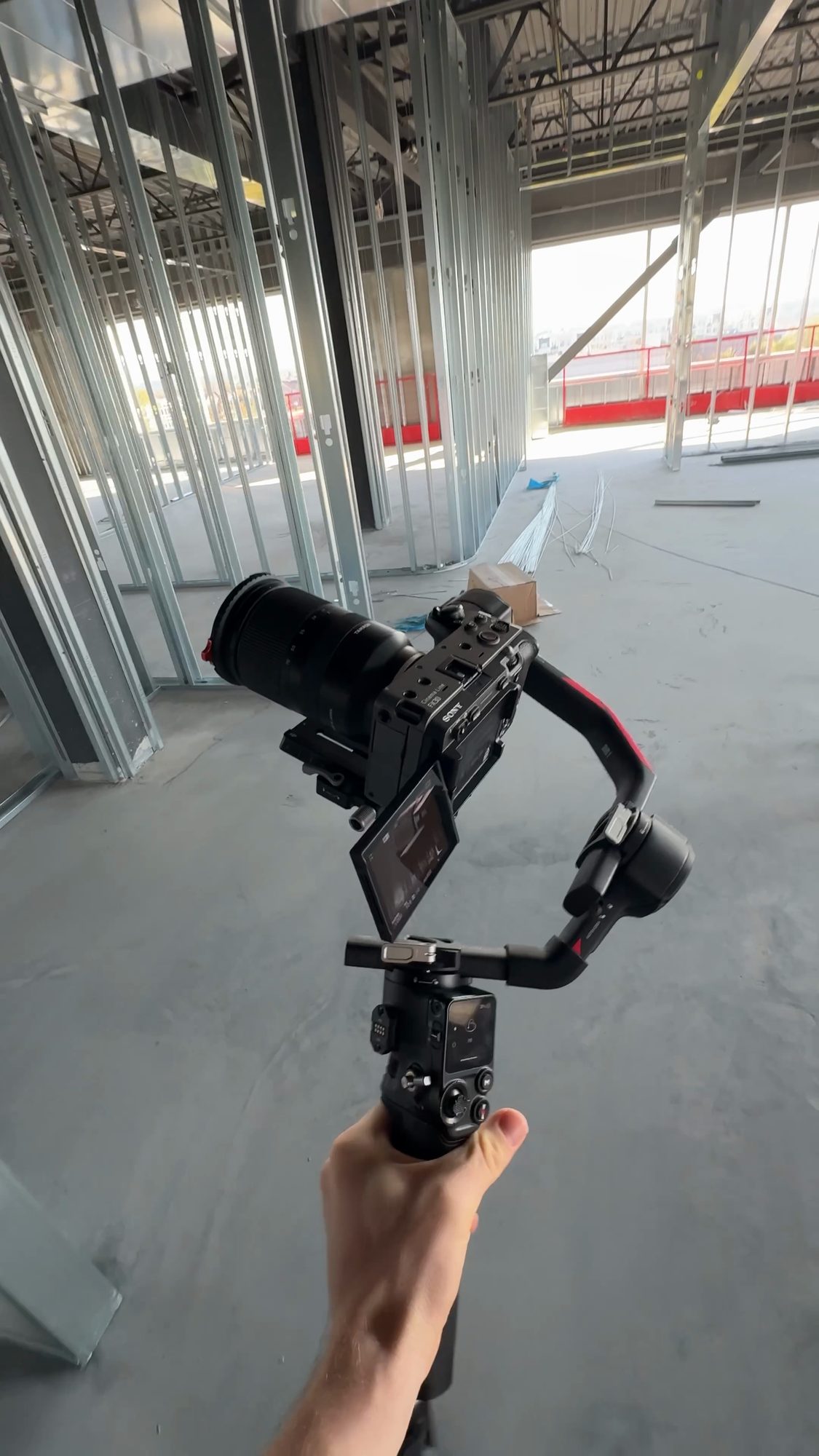
Plan a solar or clean energy shoot around the install: the installer’s safety plan and site rules lead, the install crew’s day sets the call times, and the shot list follows the stages of the job. The film needs to show the work, the people, the result and one technical idea made simple. Nowa Film, a Toronto video production company, made four vertical films for Solify that follow roofers and trades at work, and video production with us usually costs $3,500 to $25,000 (CAD).
What does an energy brand’s video need to show?
Four things. The work: hands, tools and materials doing something specific. The people: the installers and trades a homeowner is trusting with their roof or basement. The result: the finished system, seen whole. And one technical idea made simple, such as how panels attach to a roof or what a home needs before it can run on electricity alone. Choose one idea per film. A film that tries to explain rebates, financing and the whole product range explains none of them.
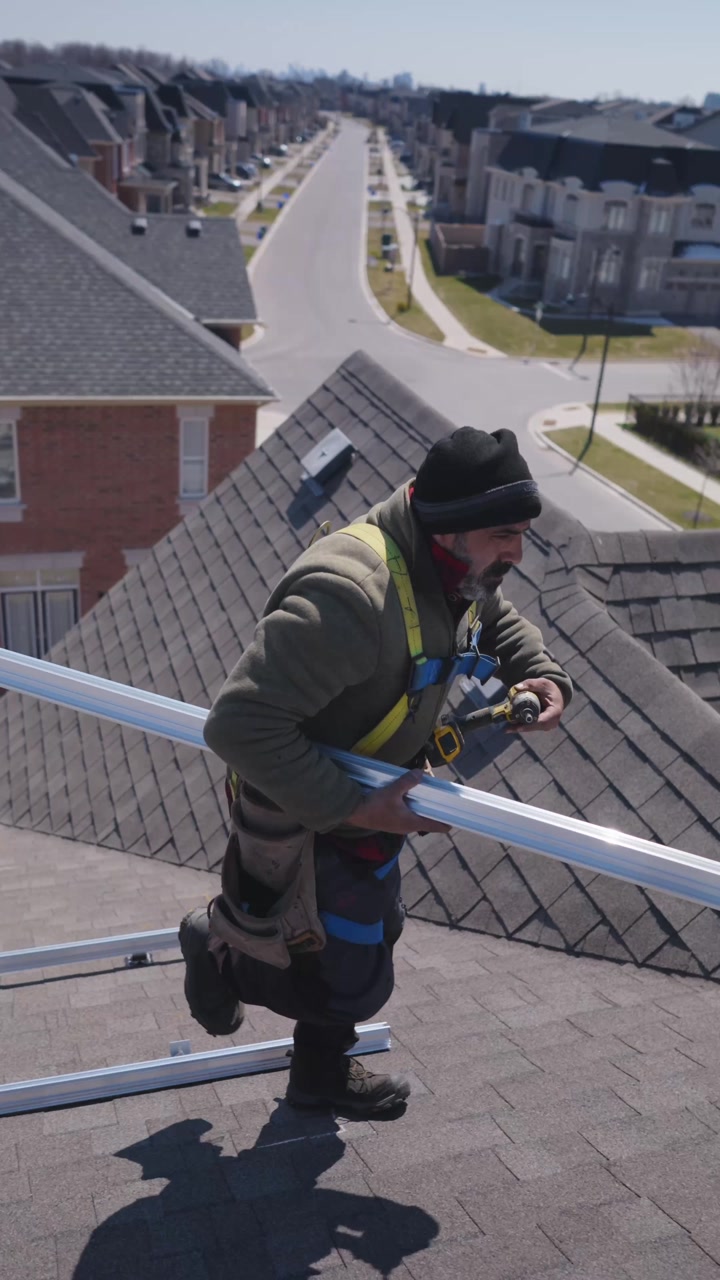
The four films we made for Solify, one of them with Professional Roofers, show how much of that the work itself can carry. Roofers in harnesses strip old shingles and fix rails and rows of black solar panels, seen up close and from straight overhead. A crew carries gear up the walk of a large stone-clad house and hauls rail across the shingles. Elsewhere, trades are at work: a drill into a brick foundation, a torch on copper line beside an indoor unit, a water heater in a basement, a grinder throwing sparks. The set uses chat-bubble captions and a black and gold end card. The titles hold the ideas: “From shingles to solar”, “More than solar”, “Going net zero” and “Inside the work”. All four sit with our social and vertical work.
The same translation problem runs through our note on video for tech companies and startups.
Planning a shoot on a live job site
On an install, the film crew is a guest on someone else’s worksite. The installer’s safety plan and site rules come first, and the shoot plan is written to fit inside them. Ask for the site lead’s name and a briefing for the film crew on arrival. Before the day, settle these with the installer:
- The site safety plan, and who on the install crew can stop filming at any moment.
- The PPE the film crew must wear on the ground and at the ladder, set by the installer.
- Who may go on the roof. If the fall protection plan cannot cover a camera operator, nobody from the film crew goes up.
- Ladder rules: who may climb, how far, and when the ladder is clear of install traffic.
- The day’s sequence, with rough times: tear-off, rails, panels, electrical and the trades inside the house.
- The homeowner’s consent, and which parts of the house and street may appear.
- A weather call: the time, and the person who decides whether the shoot goes ahead.
Keep the roof crew small. Where the safety plan allows one operator on the roof with a compact camera, the other cameras stay on the ground with a long lens, across the street, or at the head of a secured ladder the installer has approved for close shots of hands and rails. A small camera on a roofer’s helmet or harness works only if the installer approves the mount.
Schedule around the install. Crews start early and work while the weather holds, so the shoot follows them. Film each stage as it happens and never ask anyone to repeat a risky action for a better angle. A second pass of a roofer carrying rail across the driveway is reasonable if the site lead agrees. A second pass of anything at the roof edge is not.
Installers stop for weather, and so does the shoot, so hold a weather day in the plan. Black panels under hard midday sun give deep contrast and bright sky reflections; a polarising filter helps. If the install only allows midday, plan the final wides of the house for a short return visit in lower light.
Drones and overhead views
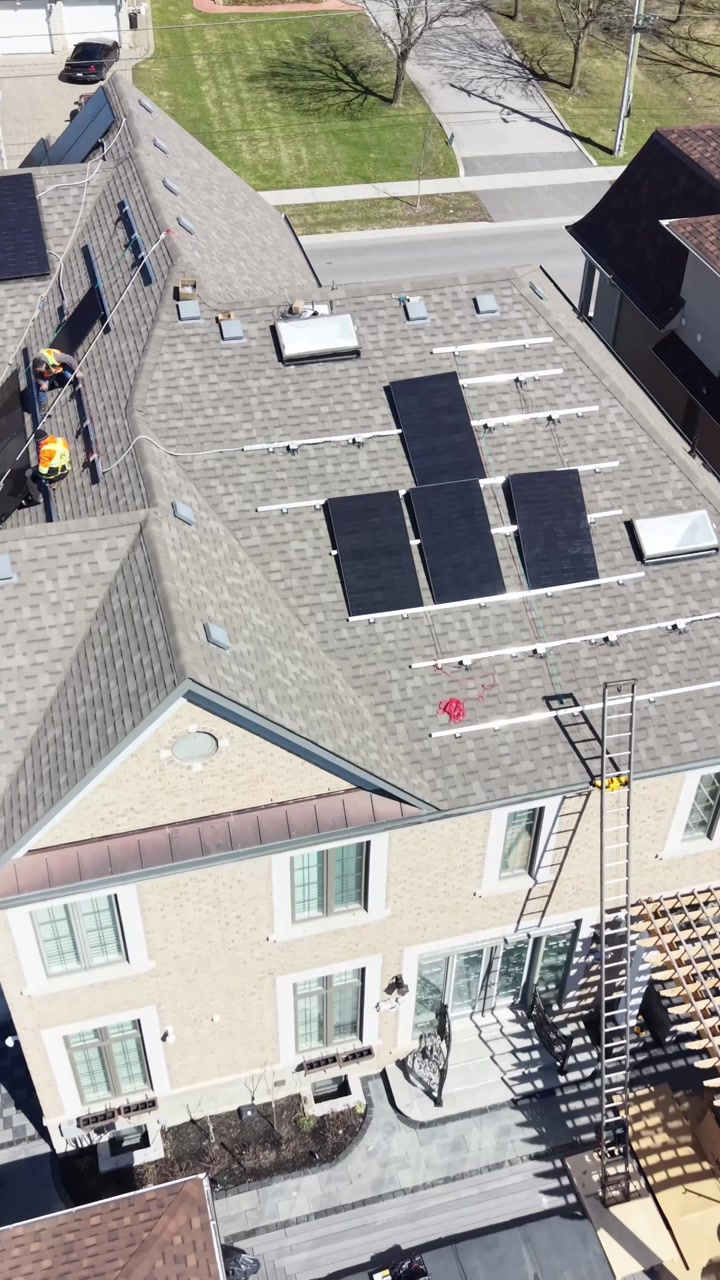
Overhead is the shot that makes an install readable. Rows of panels become a pattern, the house sits in its street and progress shows at a glance. Choose one overhead position and return to it at each stage, so the edit can show the roof filling in.
If that view comes from a drone, Transport Canada’s page on flying your drone safely and legally says you must register and mark the drone, and pilots must carry a valid drone pilot certificate. Drones under 250 grams (about 9 oz) need neither, but the microdrone rules still apply. The same page says pilots must respect trespassing laws and the privacy rights of others. Its operation categories page shows that flying closer to or over people is not permitted under a Basic certificate; Advanced allows it only when the drone meets the safety feature requirements for that operation. Both pages were last modified on 4 November 2025, so check them again before your shoot.
Ask the operator which certificate they hold and whether the flight plan needs more. A job site has people on the roof, the ladder and the driveway, and the site lead should know when the drone is up. Where a drone is not the answer, a high window across the street, with that owner’s permission, can give a view down onto the roof.
A shot list by install stage
Organise the shot list by stage. It keeps the film crew in step with the installers, and the site lead can flag problems the day before.
| Stage | What to film | Why it matters |
|---|---|---|
| Arrival | The truck at the curb, gear carried up the walk, the house in its street | Sets the place and the scale before any detail |
| Safety and access | Harnesses clipped in, ladders secured, the morning briefing | Shows the care a homeowner is trusting the crew with |
| Roof preparation | Old shingles coming off, underlayment going down, marking out | The unglamorous work is where competence shows |
| Racking | Rail carried across the roof, fixings driven, hands and tools close up | Explains how the system attaches to the house |
| Panels | Panels passed up, set in rows, the same overhead frame as the array fills | The visual payoff, readable in a second |
| Inside the house | Electrical work, an indoor unit, equipment in the basement | Shows the system continues past the roof |
| Handover | The homeowner walkthrough, questions answered, the crew packing up | Puts the result in a person’s hands |
| Finished house | Wide and overhead frames of the completed roof in good light | The end frame and the thumbnail |
Interviews with installers and homeowners
Installers are credible because they do the work. Interview them at a break or at the end of the day, away from compressors and saws, and ask about a specific moment: why a rail goes where it does, or what they check before leaving a roof. A sentence in their own words beats a line written for them.
Ask a homeowner what made them decide, what the install day was like and what they would tell a neighbour. Do not script savings. If a number comes up, it becomes a claim the brand has to stand behind.
Get consent in writing: a signed release from everyone who speaks on camera, and from the homeowner for the property, the interior and anything that identifies the address, such as house numbers, street signs and licence plates. Decide before the shoot whether children or neighbours appear at all, and use a release your legal team has approved.
Vertical and widescreen versions
The Solify films are vertical, made for the phone. A vertical frame suits a roof seen from straight above, a person on a ladder and a pair of hands on a tool. It is weaker at a whole house in its street, which is often the shot a website or a trade show screen needs. If both matter, decide which setups get a separate widescreen pass before the install day, using our note on vertical or widescreen video.
Explaining net zero without overstating savings
Net zero, heat pump, kilowatt-hour and payback all need translating, and each translation is a chance to overclaim. Define each term once, show it on screen and keep every figure traceable.
- Explain each term in one sentence a homeowner would use, then let the pictures carry it.
- Say what the system does. Leave what a viewer’s bill will be to a quote for their home.
- Put no savings or output figure on screen unless the brand can show its source for that kind of home.
- Treat rebates, incentives and prices as dated facts: date them on screen or leave them to a page that can be updated.
- Have the client’s technical lead check every caption and voice-over line before the final mix.
What does a clean energy video cost?
Video production, covering brand films, testimonials, product launches and corporate video, usually costs $3,500 to $25,000 (CAD). A continuing run of vertical social content starts at $1,800 per month. Every project is quoted to its scope.
On an energy shoot, the figure moves with the number of sites and shoot days, travel, drone work, interviews and the versions that come out of the edit. One install filmed in a day for vertical cuts is a different budget from a brand film across several homes. Our guide to video production costs in Toronto explains the drivers, and our rates page lists every service.
Quick answers
Can a film crew go on the roof during a solar install?
Only if the installer’s safety plan covers them. The installer sets the site rules, the PPE and the fall protection, and decides who may go up and when. Keep the roof crew to one operator where that is allowed, and film the rest from the ground, from across the street or from a secured ladder the installer has approved.
Do I need a certified drone pilot to film an install from above?
Transport Canada says drone pilots must register and mark their drone and carry a valid drone pilot certificate, unless the drone weighs under 250 grams, when the microdrone rules apply. Flying closer to or over people is not permitted under a Basic certificate. Ask the operator which certificate they hold, and share the flight plan with the installer’s site lead.
How much does a video for a solar or clean energy company cost?
Nowa Film’s published rates put video production, including brand films, testimonials and corporate video, at usually $3,500 to $25,000 (CAD), and vertical social content from $1,800 per month. The number of sites and shoot days, travel, drone work, interviews and versions move the figure within that range. Every project is quoted to its scope.
 Google Meet