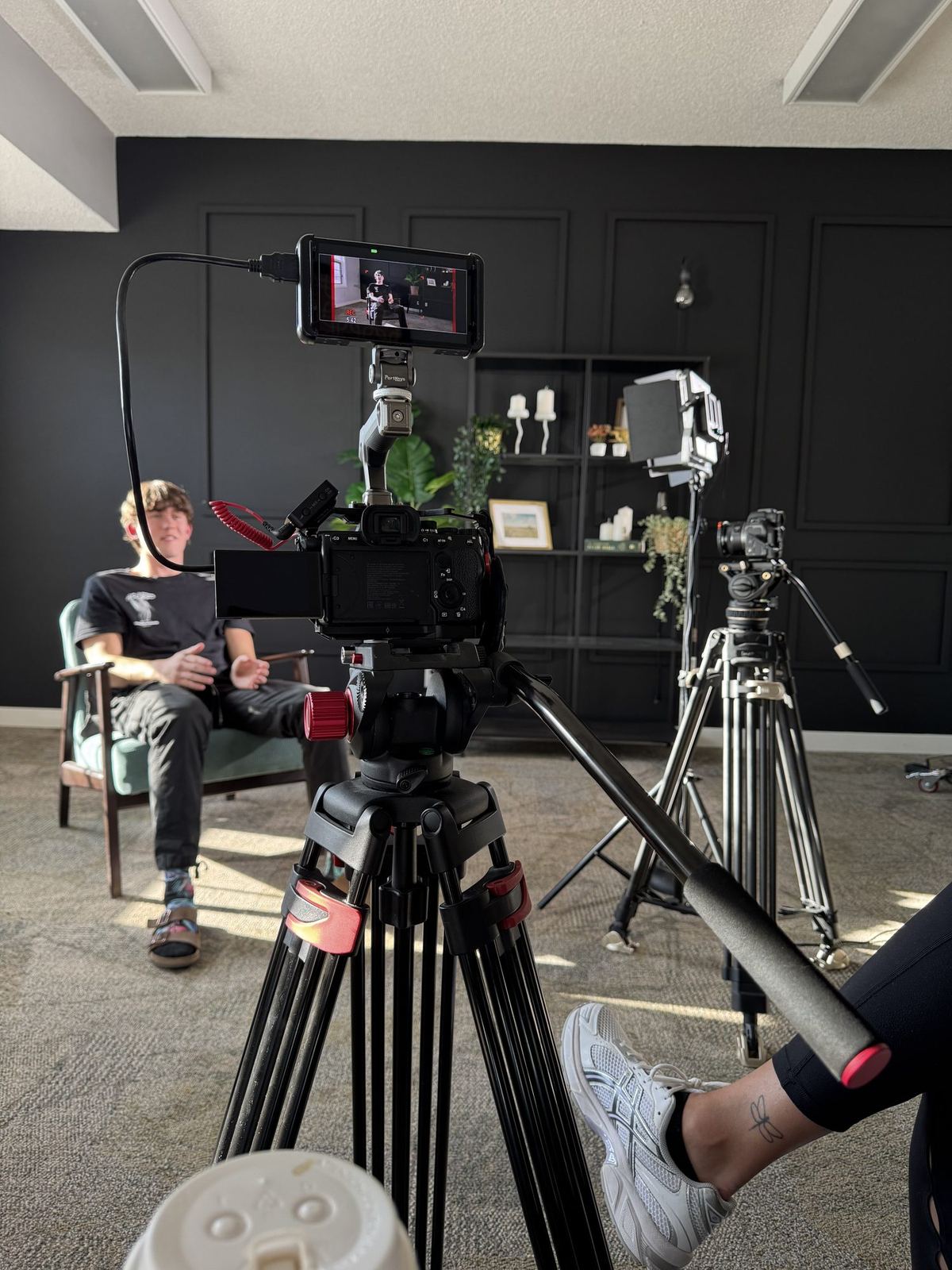
A customer story video is a short film in which a real customer explains, in their own words, the problem they had, why they chose you and what changed, filmed where their work happens. It is more specific than a testimonial and more personal than a written case study, and it works only if the customer will stand behind every line. Nowa Film, a Toronto video production company, lists testimonials under video production, usually $3,500 to $25,000 CAD.
Customer story, testimonial or case study?
The three are often treated as one thing. They do different jobs, and they ask different things of the customer.
| Format | What it is | Where it helps | What it asks of the customer |
|---|---|---|---|
| Testimonial | A short on-camera endorsement: one person on what it was like to work with you | Near a decision: pricing pages, proposals, the end of a sales deck | A short interview and a signed release |
| Customer story | A film with a problem, a decision and a change, told by the customer in their workplace | When a buyer is asking whether this works for someone like them | Time from several people, access to a location and approval from their communications team |
| Written case study | A document with context, approach, figures and quotes | When a buyer needs detail to forward, search and check | Facts and figures approved in writing |
One shoot can feed all three. The interview gives you the film, the short testimonial clips and the approved quotes for a written page. Decide which is the main deliverable before booking anything, because it sets the length of the interview and the footage you need around it.
How do you choose the customer and the story?
Choose the story first and the customer second. The useful story is a specific problem your prospects recognise and a change the customer will say out loud. A well-known logo with a vague story does less than a smaller customer with a precise one.
- The problem is one your prospects have, described in the words they use.
- The change is concrete: something the team stopped doing, started doing or can now do.
- The speaker does the work day to day, whether or not the executive who signed also appears.
- The customer’s communications team has agreed in principle before anyone plans a shoot.
- The place shows something: a site, a floor, a team at work.
Numbers are where customer stories go wrong. Use a figure only if the customer can verify it, owns the source and agrees to publish it. If they cannot, leave the number out and let them describe the difference in their own words. A specific sentence from the person who lived it is easier to believe than an unsupported percentage, and it is more likely to survive their legal review.
What approvals does the customer need to give?
A customer story borrows someone else’s name, people and premises. Clear the approvals with your contact before the shoot date is fixed. A refusal after filming is the most expensive kind.
- Communications: agreement to the story and the film’s purpose, and one named reviewer on their side.
- Legal: a review of claims, figures and the release wording. Some organisations insist on their own forms.
- Logo and name: written permission to name the company and show its logo, products and premises.
- Confidential material: what must stay off camera, such as screens, whiteboards, documents, badges, other clients’ names and secure areas.
- Releases: a signed appearance release from everyone identifiable on camera, including people in the background.
- Usage: where the film can run (your website, sales, paid ads, events), for how long, and whether the customer may use it too.
- Review: what the customer approves, usually facts and confidentiality, and in how many rounds.
Write the request as a short email your contact can forward internally. It reaches the right people faster than a call they have to summarise.
Interview questions that get natural answers
Send the topics ahead, not the questions word for word. People who rehearse an answer tend to recite it. On the day, ask for days and examples rather than opinions. Copy these and replace the brackets:
- What does your team do, and what is your part in it?
- Before you worked with [company], what was the hardest part of [the task]?
- Tell me about a specific day when that problem showed up.
- What had you tried before?
- Why did you choose [company]? What nearly stopped you?
- What was the first thing you noticed change?
- What does a normal week look like now?
- What would you tell someone in your role who is where you were?
- Is there anything we should have asked?
Ask the speaker to answer in full sentences that include the question, because the interviewer’s voice will be cut. Keep the account manager out of the speaker’s eyeline: a customer may be more candid with a neutral interviewer than with the person who sold to them. Leave a pause after each answer. The line after the pause is often the one that makes the film.
What to film around the interview
The interview carries the story. The footage around it is what makes a viewer believe it. Plan time on the day for three things:
- The work: the task the problem lived in, done for real by the people who do it.
- The place: the site, the floor, the vehicles or the office, wide enough to place the viewer.
- The people: the team around the speaker, so the change belongs to more than one person.
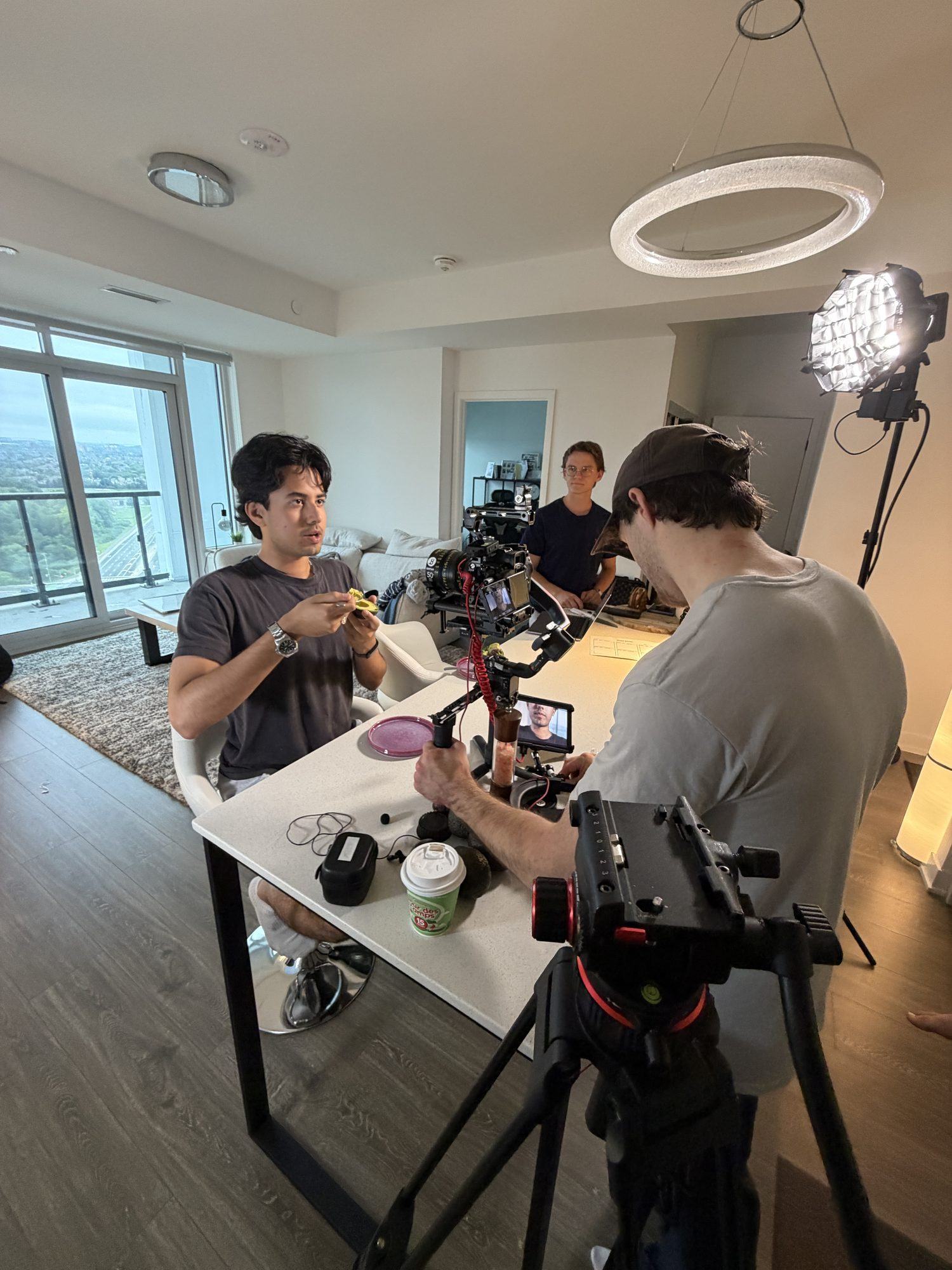
Where your product appears, film it in use and clear the screens first. Film the speaker at work as well as seated in front of a lit backdrop; a viewer trusts someone they have seen doing the job.
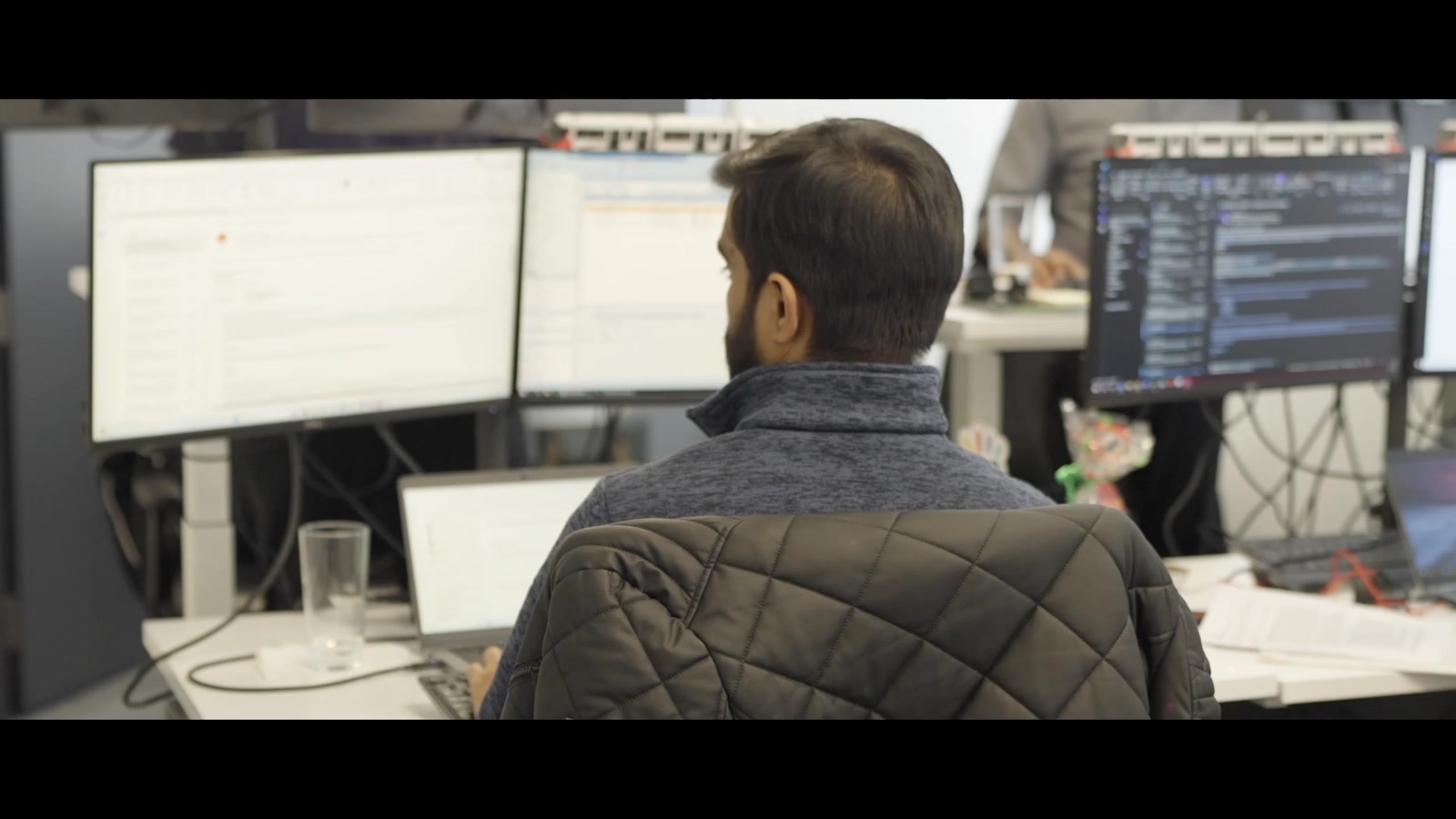
The people-led film we made for Scheidt & Bachmann Canada is an employee film rather than a customer story, and the method carries over. Team members speak in their own words on a city street, in an open-plan office and in a hallway, and lower-thirds give each name, role and city, from Toronto to Ottawa, with on-screen subtitles. A name, a role and a city on screen tell the viewer this is a real person with a real job.
How should a customer story edit be structured?
A useful order follows the questions a buyer asks. Treat the table as a starting point; a strong moment can move it.
| Beat | What the viewer learns | Where it comes from |
|---|---|---|
| Open | Who this is and where we are | The speaker at work, with name, role and company on screen |
| The problem | What was hard, through one specific example | Interview, over footage of the real workplace |
| The decision | Why they chose you and what nearly stopped them | Interview |
| The work | What happened when they put it to use | The team, the place and the product in use |
| The change | What is different now, in their words | Interview, with a figure on screen only if verified |
| The close | Their advice to someone in their position | Interview, then your end card |
Review the first cut with your own team before the customer sees it. Then send the customer a cut they can approve for facts and confidentiality, so their sign-off does not reopen the creative edit. Our guide to producing a corporate video covers review rounds in more detail.
Versions for the website, sales, LinkedIn and events
One interview day can supply several versions. Decide them before the shoot, because each needs its own opening line and framing.
- Website: the full story, around two minutes, captioned, on the case study or industry page it supports.
- Sales: a 60-second cut a rep can send after a call, plus single answers that meet common objections, such as why they chose you.
- LinkedIn: short single answers captioned for viewing without sound, framed square or vertical. Confirm whether the customer may share them.
- Events: a loop for a booth screen that works with the sound off, and the full version for a stage with audio.
Our cutdown planning guide shows how to give each version a job and keep simple resizes separate from new edits.
What does a customer story video cost?
We list testimonials under video production, and our published rate for video production is usually $3,500 to $25,000 CAD. Every project is quoted to its scope. One interview at one location with a short set of versions sits at a different point in that range from a story with several speakers, two locations, travel and a full set of cuts.
The scope moves with the number of speakers and locations, travel, how much footage of the work the story needs, motion graphics and the number of versions. The customer’s approval process can move the schedule as much as the budget, so start it early. For the wider picture, see our guide to video production costs in Toronto.
Quick answers
What is the difference between a customer story video and a testimonial?
A testimonial is a short on-camera endorsement: one person saying what it was like to work with you, useful near a buying decision. A customer story is a film with a problem, a decision and a change, told by the customer and shown in their workplace. It needs more of the customer’s time, access to a location and approval from their communications team.
What questions should you ask in a customer story interview?
Ask for days and examples rather than opinions: what the team does, the hardest part of the task before, a specific day the problem showed up, what they had tried, why they chose you and what nearly stopped them, the first change they noticed, what a normal week looks like now, and their advice to someone in their position.
How much does a customer story video cost in Toronto?
Nowa Film lists testimonials under video production, usually $3,500 to $25,000 CAD, and quotes every project to its scope. The price moves with the number of speakers and locations, travel, how much footage of the customer’s work the story needs, motion graphics and the number of versions for the website, sales, LinkedIn and events.
 Google Meet