
Producing a corporate video has three stages: pre-production, production and post-production. First agree what the film needs to change for its audience; then plan and capture the material; finally edit, review and deliver it for its intended channels. The useful planning unit is an approved decision, not simply a shoot day.
Start with the business job
A brand introduction, a customer story, a recruitment film and an executive message can all be called corporate video. They need different evidence. A brand film may show how your team thinks; a product film needs to make something understandable; a testimonial or customer story needs a credible person explaining a specific experience. Decide which job comes first, or one film becomes a committee of competing messages.
Write this sentence before choosing references: “After watching, this audience should understand or do this, because we can show them this evidence.” If the evidence is a process, plan to film it. If it is a claim, identify who can verify it. That is the beginning of a useful video production brief.
Pre-production: turn the message into a shootable plan
The treatment describes the idea, tone and approach. It should make the creative choice clear enough for a non-filmmaker to approve. “Confident and human” needs an example: perhaps a founder answering a real customer question while we see the team doing the work. Approve that approach before spending time polishing individual lines.
Prepare interview questions around stories and examples. For a tightly controlled executive announcement, a reviewed script may be the right choice. Neither approach should force every speaker into the same voice. Schedule the people with the hardest availability first, and check locations for sound as carefully as appearance.
- Confirm the main film, additional edits, aspect ratios, captions and languages.
- Name the shoot location, access contact, interviewees and products needed on camera.
- Identify brand, leadership and any specialist reviewers before the first cut.
- Agree review deadlines, the final delivery date and who combines feedback.
Production: protect the moments that carry the film
A corporate shoot includes setup, sound checks, lighting, interviews, supporting footage and changes between scenes. The number of filming days depends on that plan. An office with available speakers and a controlled room is a different production from several operating locations with limited access windows.
Give each speaker a short explanation of the audience and subject. They need to arrive prepared, not memorise a performance unless the plan calls for one. The client contact should be able to resolve access, find missing props and confirm a factual detail without pulling the speaker out of the conversation.
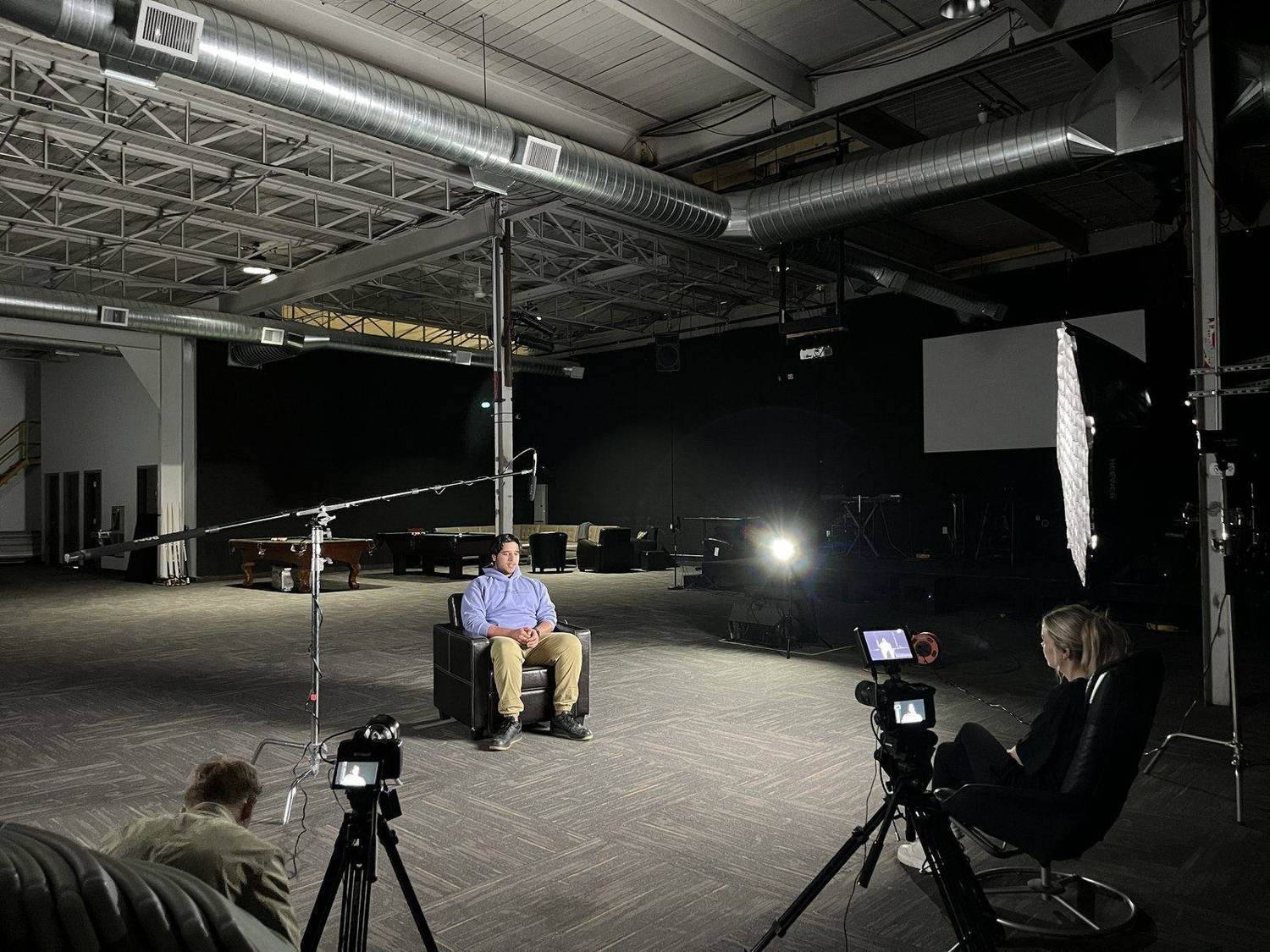
For Toronto and GTA locations, put building access, equipment loading, parking and travel between locations into the schedule. A second location can be worth it when it proves something important. When it only changes the background, ask whether the same creative effect is possible where the crew already is.
Post-production: review the right thing at the right time
Review the first cut for message, structure and missing information. Does a viewer understand the point without the brief beside them? Are the statements accurate? Once the story is agreed, move into graphics, colour, sound and the detailed finish. Reopening the central message during final colour creates work across every version.
Have stakeholders submit timecoded comments to one owner. Separate a required factual correction from a preference, and explain the problem rather than prescribing every cut. “The product benefit is unclear here” leaves room for a better solution than “remove this shot”.
How long does corporate video production take?
The schedule depends on concept development, speaker availability, location access, edit complexity and review time. Ask for dates against milestones: brief approved, treatment approved, shoot, first cut, combined feedback, final approval and delivery. A promise about filming time alone does not answer when the finished video will be usable.
If launch is fixed, work backwards from the delivery specifications and final approval. Reserve time to check the uploaded film on its actual destination. A trade show playback test or an executive presentation rehearsal belongs before the deadline, not after export.
What changes the budget and final handover?
Location moves, talent, specialist crew, art direction, animation, licensing and additional edits can change the scope. Protect the element that makes the idea work before adding another setup. Our project pricing page is a starting point for discussing scope, and our guide to video production costs in Toronto explains what moves a quote; a written estimate should describe the production being priced.
At handover, check filenames, playback, captions, titles and the approved versions. Agree separately how source footage and project files will be stored, whether they are included in delivery, and how future revisions will be handled. Owning a finished film does not tell you those details by itself.
Quick answers
What are the three stages of producing a corporate video?
Pre-production defines the audience, message, treatment, deliverables and schedule. Production captures the interviews and supporting footage. Post-production turns that material into approved edits with graphics, colour, sound and the agreed delivery formats.
How long does corporate video production take?
It depends on the creative approach, speaker availability, locations, edit complexity and approvals. Ask for a milestone schedule covering the brief, treatment, shoot, first cut, feedback, final approval and delivery rather than a promise based only on shoot days.
What should be included in a corporate video scope?
Name the films and versions, shoot arrangements, review rounds, captions, languages, music and talent usage, delivery specifications and archive arrangements. Confirm source footage and project file delivery separately rather than assuming they are included.
 Google Meet