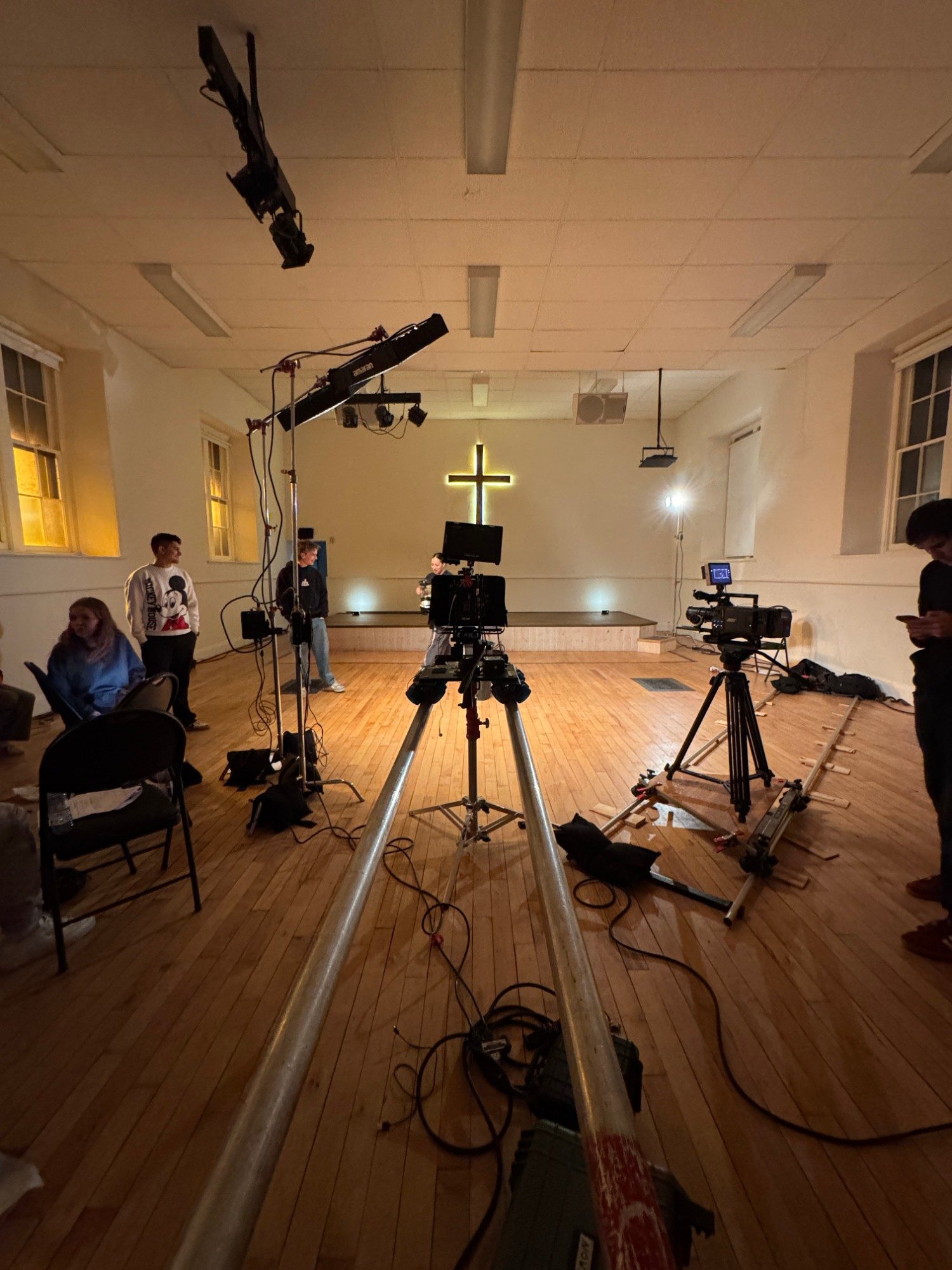
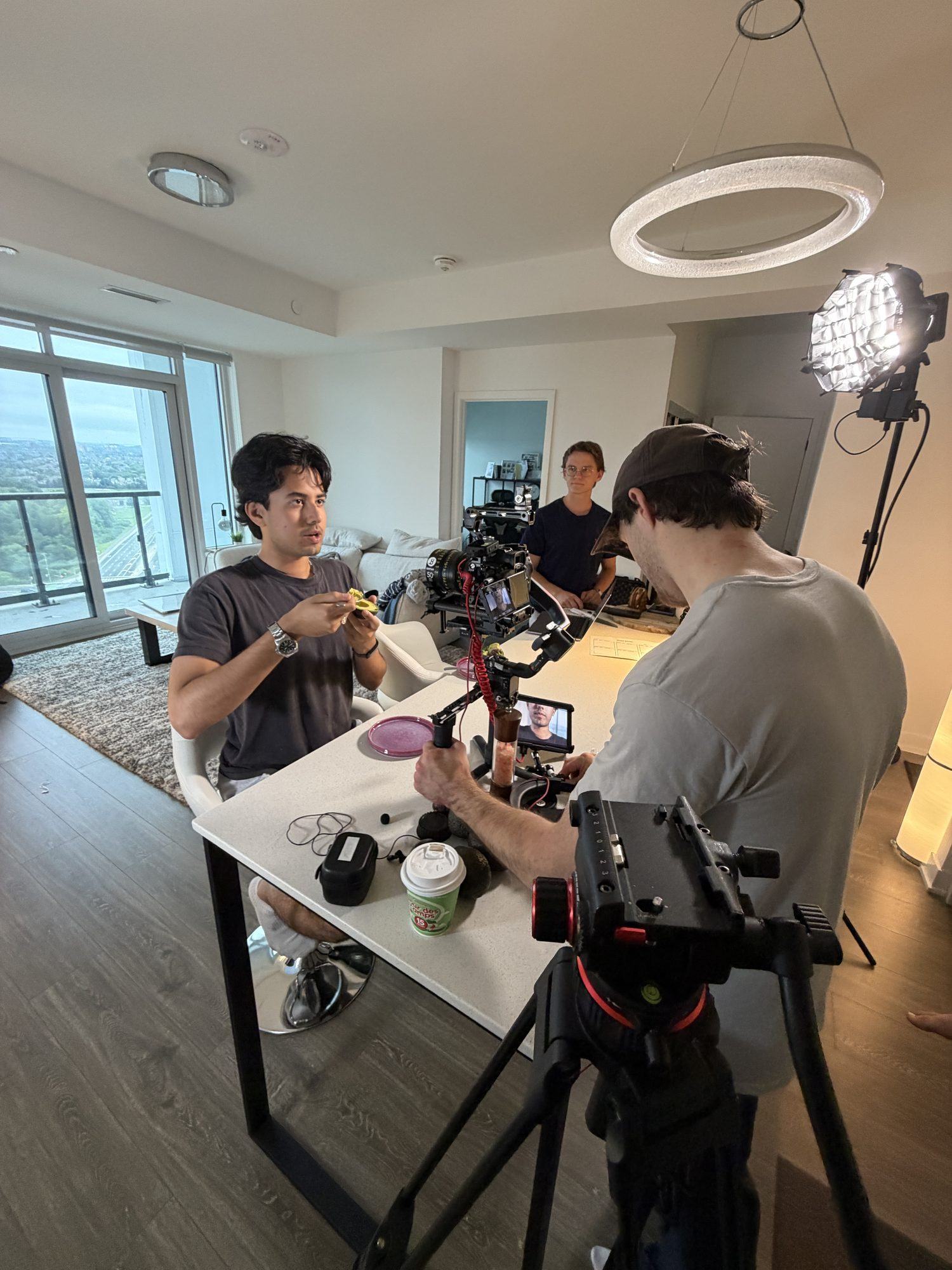
For an interview or event in a room you cannot fully control, start by choosing the best position for the subject and camera. Assess the background, existing light and sound, then add or reduce light where the space permits. A useful location plan solves these together; a beautiful room with constant noise can still be the wrong place to record an interview.
Walk the room before unpacking it
A window, a distant background or an uncluttered corner can give the scene a direction. Our starting point is to look through the camera and see what that direction does for a face, product or action. Moving the subject may solve more than adding another fixture.
Look beyond the main frame too. People need a route through the room, equipment needs space and the crew needs somewhere to work. A room that looks right when empty may stop working once the speaker, camera and other people are in place.
Decide which light to keep
Daylight, overhead fixtures, decorative lamps and stage lighting can pull a face in different directions. Rather than adding more light immediately, identify which source should shape the subject and which is getting in the way. Where permitted, turning off a fixture or using a flag can be more useful than another light.
One large soft source is a useful starting point for an interview, with the background treated separately. That does not make it a universal package. A wide product scene, a reflective surface or a live stage needs a plan suited to what the camera actually sees.
Test conditions that may change
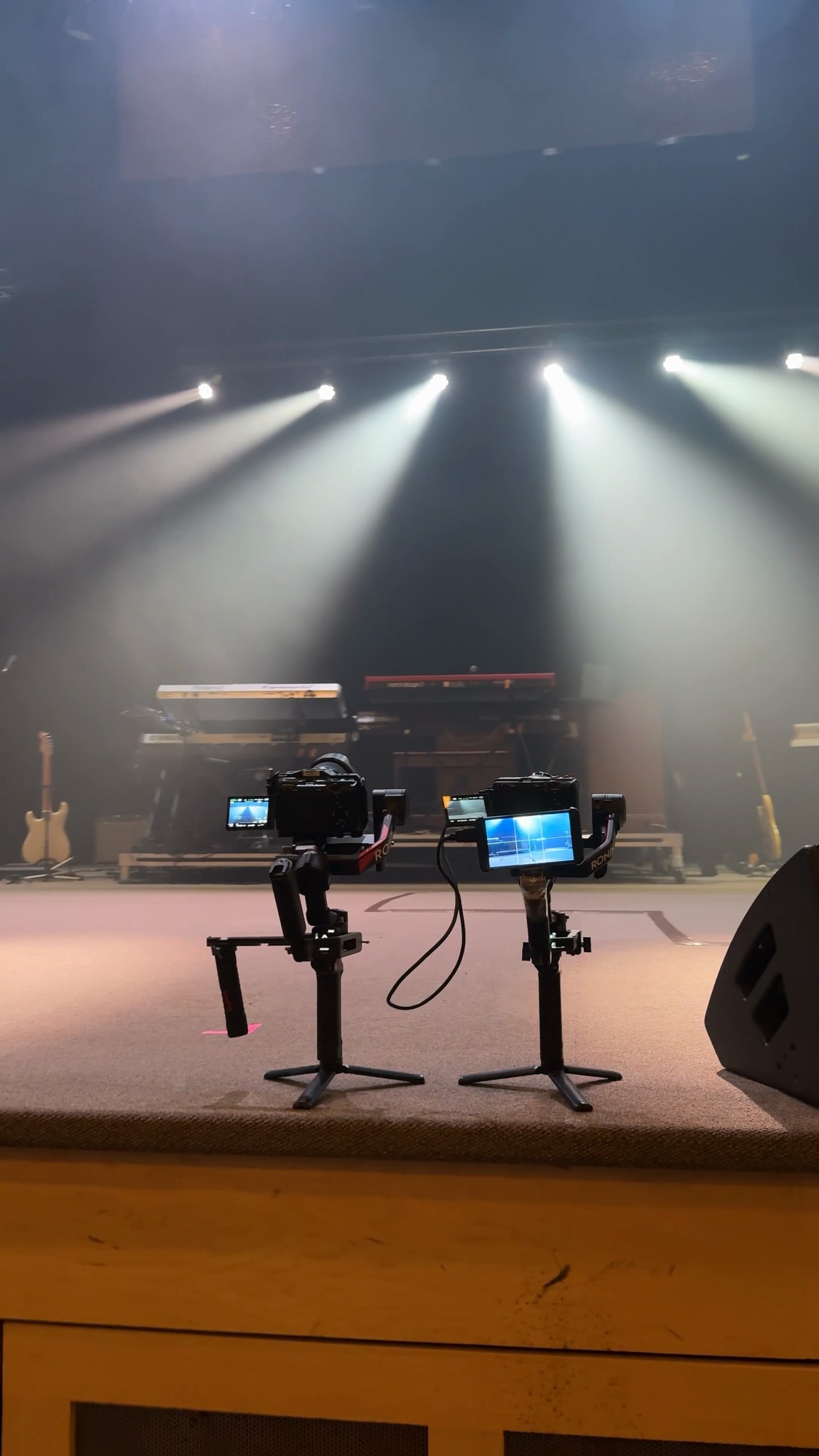
Ask when the room will be filmed and how its light changes. A window can look different between setup and the final interview. Event cues may lower house lights, colour the stage or bring a screen into the frame. Test the actual camera settings and playback conditions where possible, rather than trusting how the room looks to the eye.
For a venue event, coordinate with the lighting and AV teams. The production crew needs to understand the show rather than interrupt it. Our gala coverage approach connects these cues to the camera plan.
Do not trade clean sound for a better wall
An interview room near a lift, kitchen or active loading area may create interruptions throughout the session. Check ventilation, nearby meetings, music and equipment noise. Ask what can reasonably be quieted and when; do not build a plan around shutting down a working business without agreement.
A quiet room with a simpler background can leave more time for a natural conversation. For leadership or founder interviews, protecting that attention is part of the visual result too. The person on camera should be speaking to someone, not waiting repeatedly for the room to settle.
What the client can send in advance
- Photos of the room from several directions, including windows and ceilings.
- The filming time, room availability and any access restrictions.
- Information about noise, public traffic and nearby activity.
- Which lights can be controlled, and who can authorise changes.
- Whether furniture can move and which branding must remain visible.
- The venue or building contact who can answer practical questions.
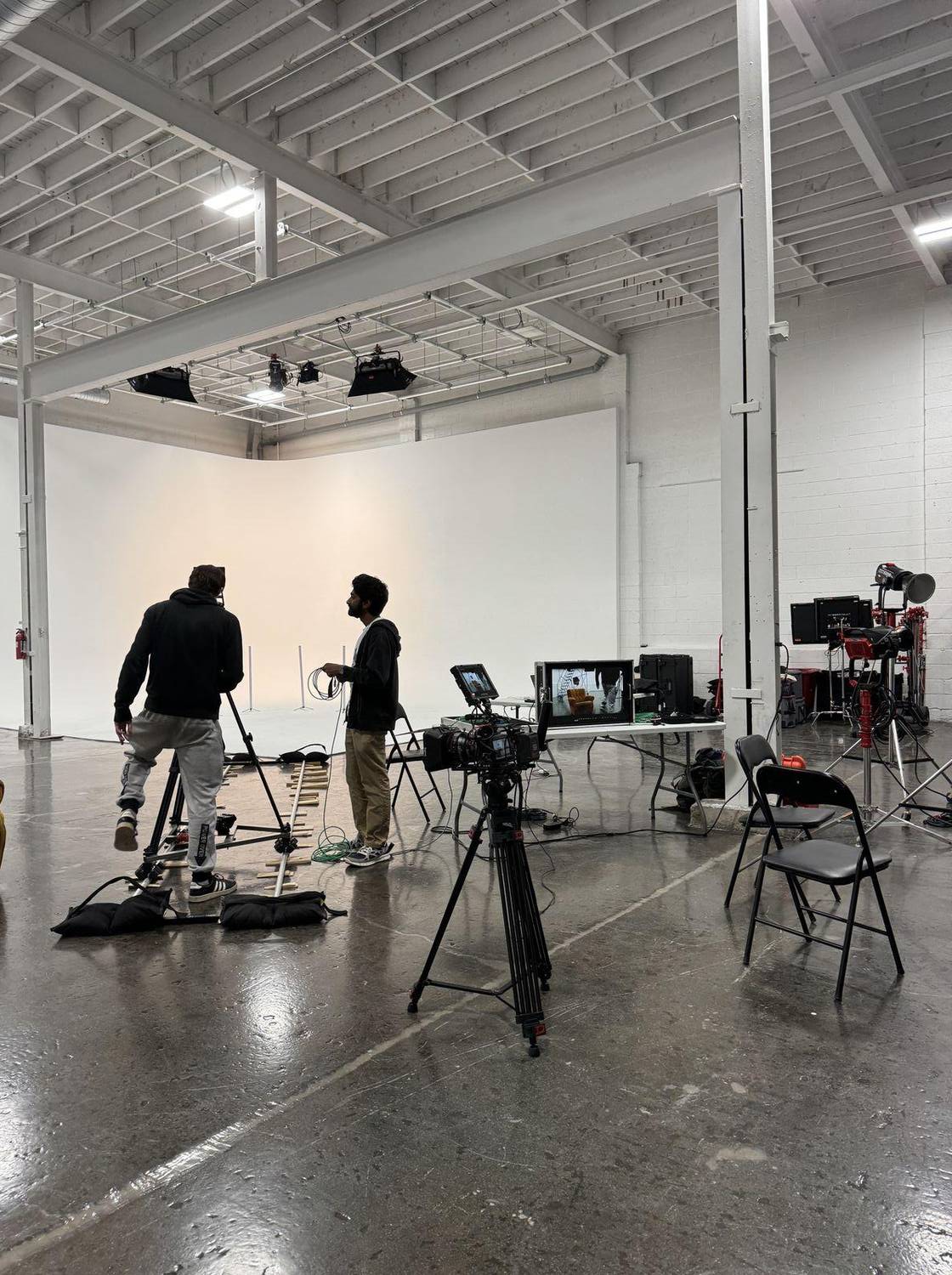
For an office shoot in Toronto or the GTA, include the route from equipment loading to the room. Setup time starts with getting there. These details help decide whether a location check is needed before the shoot is committed.
Put location decisions into the schedule
If the room supports only one useful angle, plan the interview and its supporting footage accordingly. If daylight is central to the look, schedule around it and identify an alternative. Keep lighting changes proportional to the value they bring to the film.
The lesson carries into the equipment plan: bring tools to solve known jobs, with sensible contingencies for what cannot be controlled. More equipment is not a substitute for knowing what the location allows.
Quick answers
How do you light an interview in an office?
Choose a camera position with a useful background, assess existing light and sound, and establish the main light on the subject. Where allowed, reduce distracting or mixed light before adding more fixtures. The final plan depends on the room, timing and framing.
What should I check before choosing a room for filming?
Check sound, daylight changes, overhead lighting, background, equipment space, access and how long the room can stay available. A quiet practical room may work better than a striking location that cannot be controlled.
What location information should I send a video crew?
Send photos from several directions, filming times, room dimensions if available, access restrictions, noise information, lighting controls and the building or venue contact. Also identify furniture or branding that cannot move.
 Google Meet