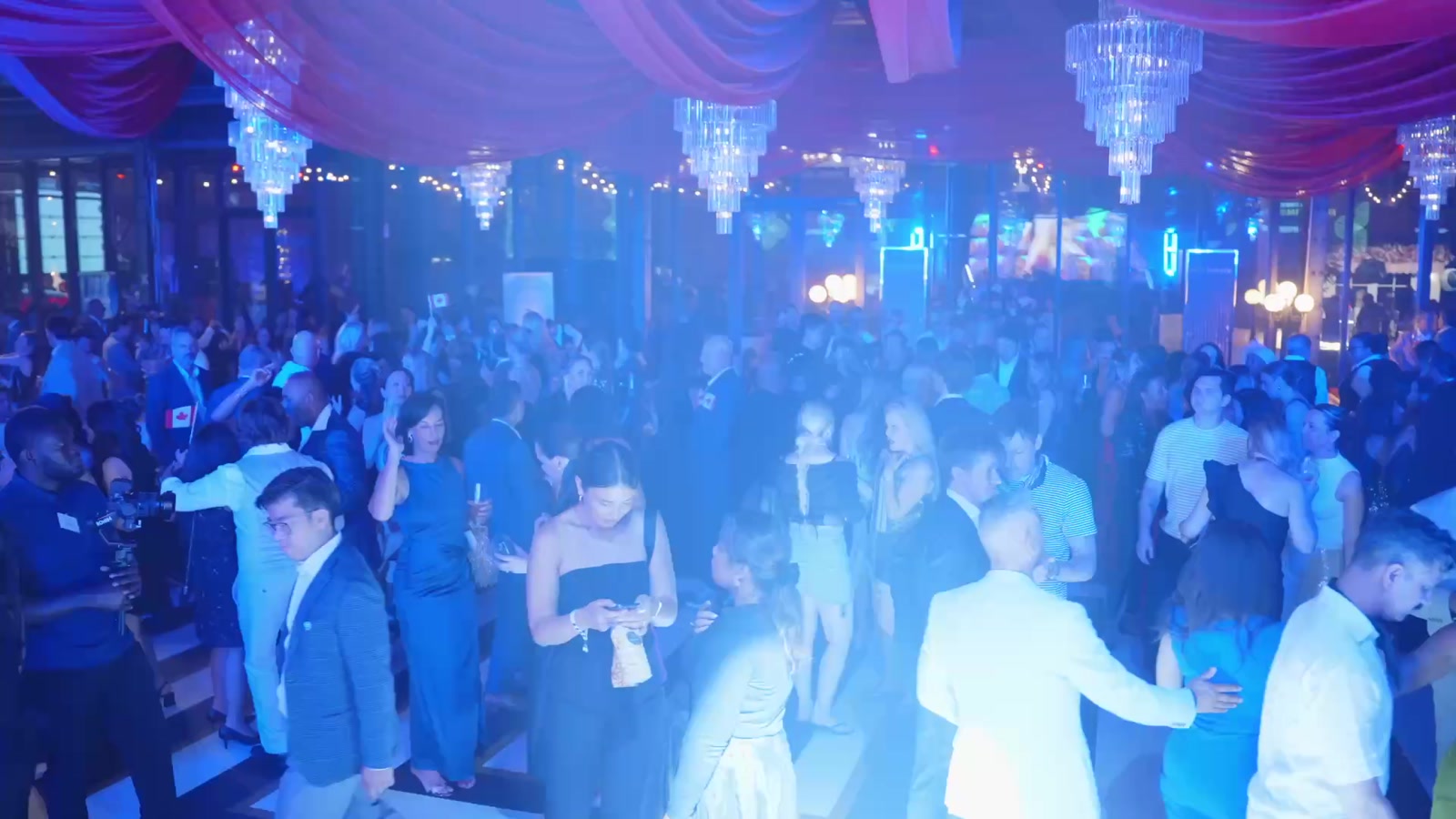
A same-day event recap is a highlight film edited while the event is still happening and delivered on an agreed deadline that day. It requires a planned story, separate capture and edit responsibilities, reliable media handoffs and an available approver. Speed comes from making the right decisions in advance, not skipping the finish.
Start with where the film will play
A closing-session screen, a social post that evening and an email the next morning are different deadlines. The screen version may need a file delivered to the AV desk and tested before the audience returns. A social version may need captions, a different frame and an approved post. Name the destination first.
Then work backwards: playback test, file transfer, export, final approval, first review and the last essential footage arriving in the edit. That final capture cutoff determines which moments the film can honestly include. If the award presentation ends just before the recap must play, agree whether the film ends before it or delivery moves.
Build the shape before doors open
The working structure can be simple: why people are here, the energy and substance of the day, and an ending that looks forward. Match each beat to something in the running order. A planned interview prompt can supply a closing line; a spontaneous moment can improve it if there is time.
Approve logos, title spelling, graphic style, the music direction and the final message in advance. Prepare what can be prepared, but leave room for the event to be itself. A same-day film should feel responsive to the room rather than like unrelated shots dropped into an inflexible template.
Make the media handoff a production job
Someone films and someone edits. Depending on the venue and coverage, other people may handle cameras, sound or the transfer between them. Do not assume the editor can leave the workstation repeatedly without affecting delivery, or that the roaming camera can stop covering the event whenever a card is needed.
Agree how files will be labelled, transferred and checked. The handoff should tell the editor where the usable speech is, which moment matters and whether a file is complete. Keep a backup before reusing media. A disciplined handoff lets the editor make decisions instead of hunting for the keynote.
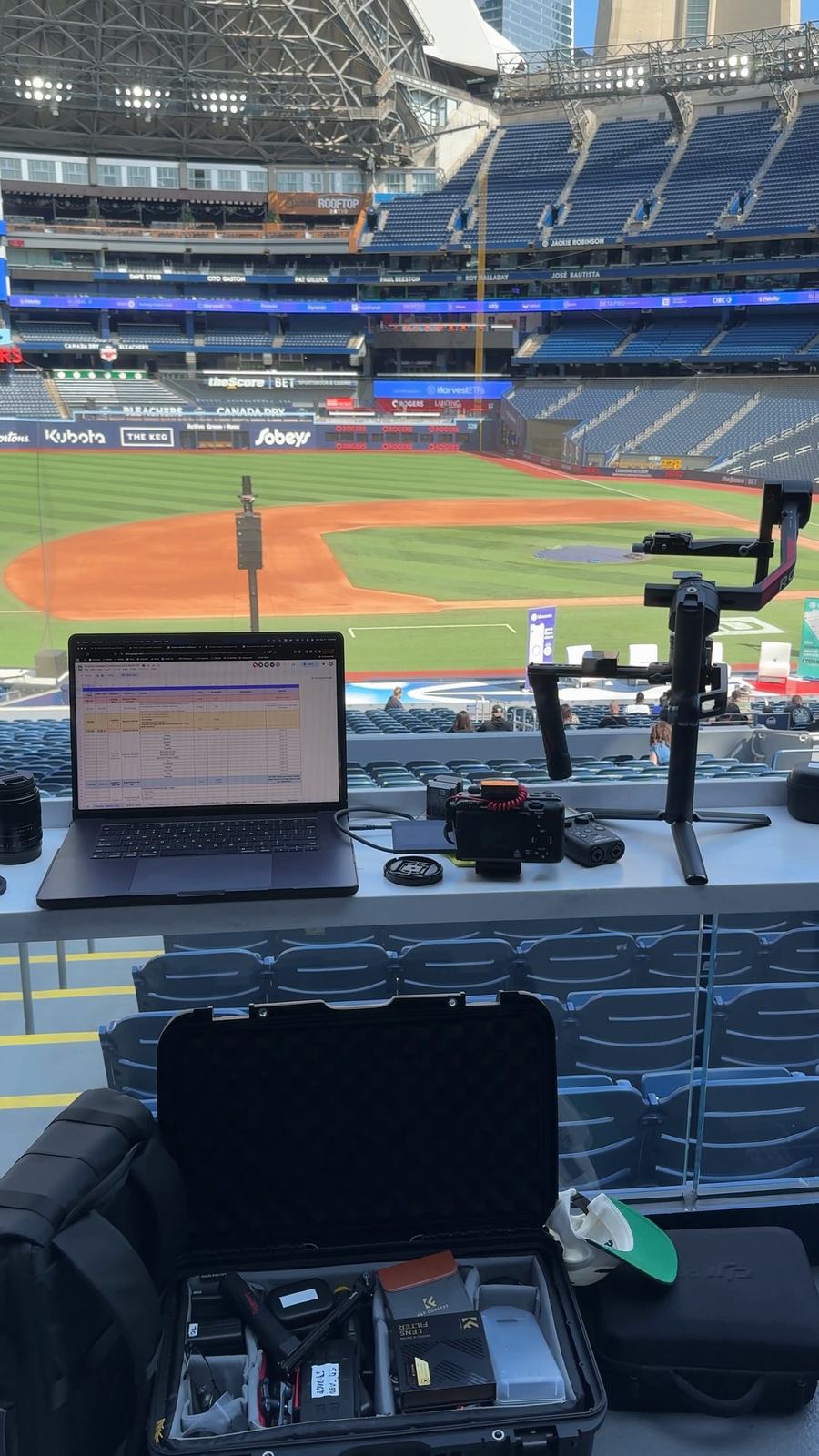
Set up the edit space for the actual venue
- Power, a stable work surface and a location where the editor can hear the soundtrack.
- Enough storage and a tested process for copying and backing up footage.
- Approved brand assets and music available locally before arrival.
- A contact with the AV team for screen format, sound and file delivery.
- A transfer route that does not depend entirely on crowded guest Wi-Fi.
- A clear way to reach the approver while they are busy running the event.
For a Toronto conference or gala, confirm these arrangements with the venue before the crew arrives. A desk close to the action may be useful for handoffs; a quieter room may be better for audio decisions. Choose deliberately rather than discovering the tradeoff during the first edit.
Protect a short, decisive review
Ask one person to consolidate the client decision. On this deadline, the review is for accuracy, omissions that matter and the approved creative direction. It is not the moment to introduce a new campaign message or send the cut through a previously unknown committee.
Reserve time for export and playback after approval. The file is not delivered merely because the editor can watch it. It needs to reach the screen or channel in the right format, play correctly and have a fallback if the connection fails.
Know when the deadline is worth it
Same-day delivery can be valuable when the film has an immediate role in the event or communications plan. When it does not, compare the rush workflow with a later delivery that allows broader coverage, more considered interviews or more review time. This is a budget choice about purpose, not a test of how hard the crew can work.
Use our event videographer briefing guide for the wider coverage plan. Scope any later master, vertical versions or sponsor edits separately so everyone knows what follows the same-day film.
Quick answers
Can a recap include the final moment of an event and play immediately afterwards?
Only if the schedule leaves enough time for that footage to reach the editor, be incorporated, reviewed, exported and tested. Set the last essential capture time by working backwards from playback; otherwise change the ending or the delivery deadline.
What crew does a same-day event recap need?
It needs separate filming and editing responsibilities, with a clear media handoff. The number of people depends on the venue, simultaneous coverage, sound and transfer needs. Do not assume a single person can cover all those jobs during the same window.
What should be approved before a same-day edit?
Agree the film structure, key moments, brand assets, music direction, titles, delivery format and the person authorised to approve the cut. Protect time after that approval for export, transfer and playback testing.
 Google Meet